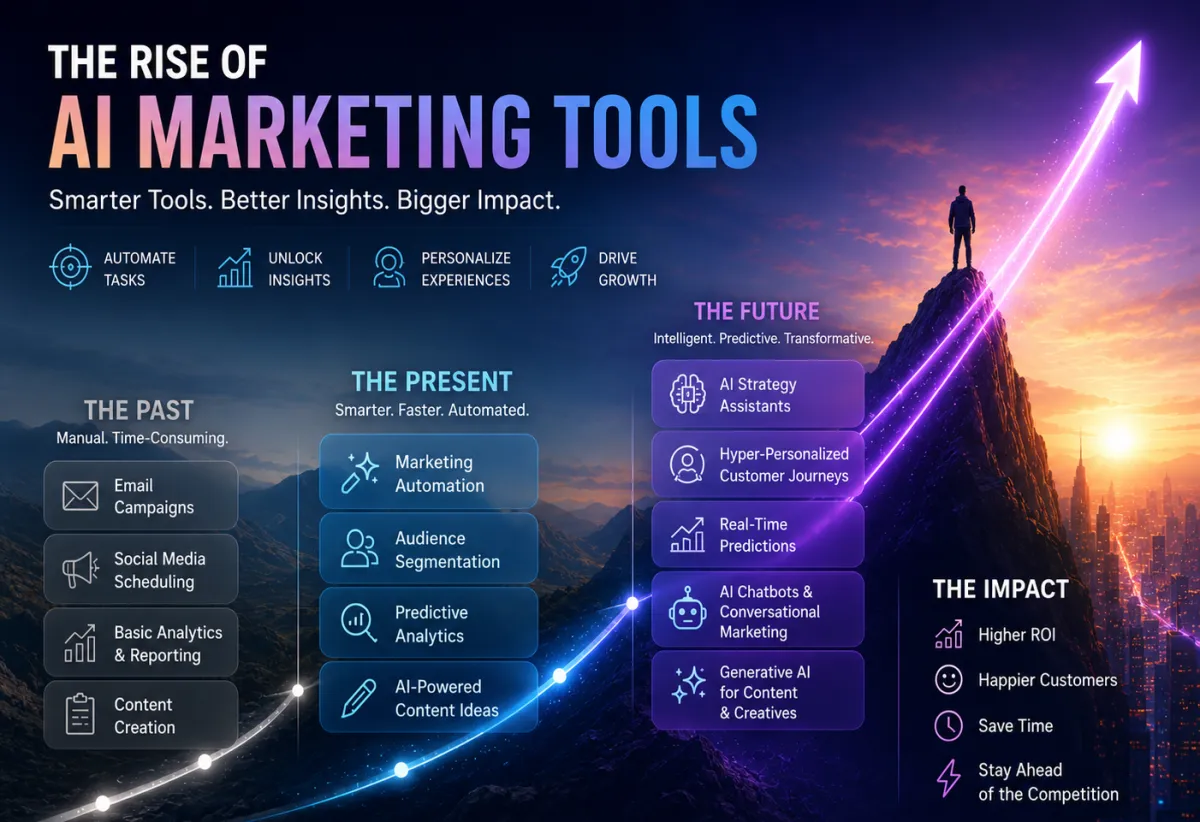
The Rise of AI Marketing Tools: Transforming How Brands Grow
Introduction
Marketing has always been about understanding people: what they want, when they want it, and how to reach them effectively. What’s changed in recent years is the scale and speed at which this understanding can happen. AI marketing tools are no longer experimental; they’re becoming essential for businesses that want to compete in a digital-first world.
What Are AI Marketing Tools?
AI marketing tools use machine learning, data analysis, and automation to improve marketing performance. Instead of relying solely on human intuition or manual processes, these tools analyze massive amounts of data to uncover patterns, predict behavior, and optimize campaigns in real time.
They can handle tasks like: Customer segmentation, Content creation, Email personalization, Predictive analytics, Ad targeting and optimization. The result is faster decision-making and more precise marketing.
Why AI Is Reshaping Marketing
The biggest advantage of AI is efficiency paired with intelligence. Traditional marketing often involves guesswork: testing campaigns, waiting for results, and adjusting. AI shortens that cycle dramatically.
Here’s what makes AI marketing tools powerful:
1. Data-Driven Insights
AI can process far more data than a human team ever could. It identifies trends in customer behavior, helping marketers understand what actually works.
2. Personalization at Scale
Instead of sending one message to thousands of people, AI enables tailored messaging for each individual without requiring thousands of marketers.
3. Automation of Repetitive Tasks
Tasks like scheduling posts, sending emails, and managing ads can be automated, freeing up time for strategy and creativity.
4. Predictive Capabilities
AI doesn’t just analyze the past; it predicts future behavior. This allows businesses to anticipate customer needs and act proactively.
Key Categories of AI Marketing Tools
AI marketing isn’t a single tool, it’s an ecosystem. Here are the main categories driving impact:
1. Content Creation Tools
These tools generate blog posts, social media captions, product descriptions, and more. They help marketers produce content faster while maintaining consistency.
2. Email Marketing Automation
AI analyzes user behavior to send emails at the right time with the right message, increasing open rates and conversions.
3. Customer Relationship Management (CRM)
AI-powered CRMs track interactions and predict which leads are most likely to convert, helping sales teams focus their efforts.
4. Ad Optimization Platforms
AI continuously tests ad variations and adjusts targeting, bidding, and creatives to maximize ROI.
5. Chatbots and Conversational AI
These tools provide instant customer support, answer questions, and guide users through the buying process 24/7.
Benefits for Businesses
Adopting AI marketing tools isn’t just about keeping up with trends—it delivers measurable advantages:
-Higher ROI: Smarter targeting reduces wasted ad spend
-Better Customer Experience: Personalized interactions feel more relevant
-Faster Execution: Campaigns can be launched and optimized quickly
-Scalability: Growth doesn’t require proportional increases in staff
Challenges to Consider
AI marketing tools aren’t perfect, and using them effectively requires awareness of their limitations:
-Data Quality Matters: Poor data leads to poor insights
-Over-Automation Risks: Too much automation can make messaging feel robotic
-Learning Curve: Teams need time to understand and trust AI systems
-Ethical Concerns: Privacy and data usage must be handled responsibly
The Future of AI in Marketing
AI will continue to evolve from a supporting tool into a central decision-maker in marketing strategies. Expect more advanced personalization, deeper predictive analytics, and tighter integration across platforms.
However, human creativity and judgment won’t become obsolete. The most successful marketers will be those who combine AI’s analytical power with human insight and storytelling.
Final Thoughts
AI marketing tools are not about replacing marketers, they’re about amplifying what marketers can do. Businesses that embrace these tools thoughtfully will gain a significant competitive edge, while those that ignore them risk falling behind.
The real opportunity lies in balance: using AI to handle the heavy lifting while humans focus on strategy, creativity, and connection; the elements that truly resonate with audiences.